

How to Choose Sustainable Corporate Gifts: A Practical Guide for Businesses
Choosing sustainable corporate gifts sounds straightforward until you actually have to do it. A quick search will bring up everything from reusable water bottles and branded tote bags to plants, food hampers and products made from recycled materials, all described as sustainable in one way or another.
The problem is that being sustainable does not automatically make something a good gift. A product can have impressive environmental credentials and still be something your employees or clients do not particularly want. If it ends up forgotten in a cupboard, left in an office drawer or thrown away, much of the point of choosing a sustainable gift has been lost.
After sending thousands of corporate gifts through Social Stories Club, we believe businesses should start somewhere slightly different. Rather than asking only, "Is this gift sustainable?", ask "Will somebody genuinely enjoy receiving this, and can we make the way we source it create a more positive impact?"
The best sustainable corporate gifts manage to achieve both.
What is a sustainable corporate gift?
A sustainable corporate gift is a gift chosen with consideration for its environmental and social impact, including how the products are produced, packaged, sourced and delivered, as well as whether the recipient is actually likely to use them.
There is no single feature that automatically makes a corporate gift sustainable. A reusable product is not necessarily sustainable simply because it can theoretically be used many times, just as cardboard packaging does not automatically make everything inside a gift environmentally responsible.
Instead, businesses should look at the whole gift. This includes whether recipients will actually use the products, where they came from, who made them, what materials have been used, how much unnecessary packaging is involved and what happens to that packaging afterwards.
At Social Stories Club, we would add another consideration to that list: where does the money spent on the gift ultimately go? Choosing products from social enterprises allows businesses to use existing corporate gifting budgets to support organisations that are tackling social and environmental challenges through trade.
This idea is increasingly being applied to wider corporate procurement. Social Enterprise UK's Buy Social Corporate Challenge encourages businesses to use their everyday procurement spend to create social and environmental impact by purchasing from social enterprises. For corporate gift buyers, the same principle can be applied to money already allocated to employee and client gifting.
Start with the recipient, not the sustainability claim
One of the biggest mistakes businesses can make when choosing sustainable corporate gifts is becoming so focused on sustainability credentials that they forget the person who will actually receive the gift. A sustainable gift that nobody wants is still wasteful, so before looking at packaging, certifications or environmental claims, think about whether the recipient is actually likely to eat, drink, use or enjoy what you are sending.
Of course, that becomes considerably harder when you are buying gifts for a large team. Employees will have different tastes, dietary requirements and lifestyles, and the person organising the gifts is unlikely to know whether every employee would prefer milk chocolate to dark chocolate, candles to soap or sweet treats to something they can use at home.
If you don't know exactly what each recipient would want, giving them the ability to choose can be a much better solution than trying to find one supposedly universal gift.
What we have learnt from one customer who lets every employee build their own gift!
One of our long-standing corporate customers, Suki, has bought Christmas gifts from Social Stories Club for her team every year for several years. Her employees now know that their Social Stories Club Christmas hamper is coming and get genuinely excited about it, not only because they are receiving a box full of treats, but because Suki lets every member of her team build their own gift box.
Rather than Suki having to guess what everyone would like, each employee can choose the products that appeal to them. One person might choose milk chocolate while somebody else prefers dark chocolate; others might choose socks, candles, soaps or a completely different combination based on their own tastes.
What has fascinated us most is seeing just how different the finished boxes are. When people are given genuine choices, they do not necessarily build the balanced gift box that somebody in HR or marketing might have imagined for them. They build the gift they personally want.
One employee once chose three different bath salts for their box. We later discovered that they had enjoyed the bath salts they received the previous year so much that, when Christmas came around again, they deliberately chose several so they could continue using them throughout the year. Another recipient used their allowance to choose multiple bars of the same chocolate because that was simply what they wanted most.
These might look like unusual choices if somebody else were building the gift on their behalf, but that is precisely the point. The perfect gift for one person can look completely different from the perfect gift for somebody else.
This is one of the reasons we are such strong advocates for Build Your Own corporate gift boxes. If you know somebody incredibly well, you may be able to choose exactly what they would love. If you are buying for 50, 100 or 500 employees, however, allowing recipients to make those decisions themselves can create a far more personal gift without requiring the person organising it to somehow know hundreds of individual preferences.
It can also support the sustainability objective behind the gift. Rather than sending every employee identical products and hoping they will use them, choice gives recipients the opportunity to select products they genuinely want. In our experience, the resulting boxes can be wonderfully different, and that individuality is a good indication that people are choosing for themselves rather than simply receiving another generic corporate gift.
The goal, therefore, should not be to find the product that looks most sustainable. It should be to create an enjoyable gift experience while making thoughtful decisions about how that experience is produced, and sometimes the most effective way to start with the recipient is simply to let the recipient choose.
Look for quality before novelty
Corporate gifting has a tendency to gravitate towards novelty. Businesses understandably want to send something memorable, but unusual does not always mean useful, desirable or sustainable.
We would choose an excellent product that somebody genuinely wants to consume or use over a novelty product that exists primarily because it can have a company logo printed on it.
This is one of the biggest lessons we have learnt from working with social enterprises. Sustainable and purpose-led products do not need to be worthy alternatives to better conventional products. Many of them are exceptional products in their own right.
Some of the products we originally discovered through Social Stories Club have become everyday products in our own lives. Our founder uses UpCircle face cream every day, ARTHOUSE Unlimited soap has become a household staple, and our canvas tote bags are regularly used long after the original occasion they were created for.
That is the standard businesses should be aiming for. If you removed the sustainability story entirely, would the recipient still be delighted with the product? If the answer is no, keep looking.
Ask what makes the gift sustainable
"Sustainable" is an extremely broad term, which means businesses should be willing to look beyond the word itself. If a supplier describes a corporate gift as sustainable, ask what specifically makes it sustainable and look for concrete information about materials, sourcing, production, packaging and delivery rather than relying on a general environmental claim.
Packaging is particularly worth scrutinising because different materials have very different recycling outcomes. UK Government waste statistics show that, provisionally, 75.2% of UK packaging waste was recycled in 2024, but the rate varied significantly by material. Paper and cardboard achieved an 86.4% recycling rate, compared with 53.7% for plastic.
This is one reason why simply saying that packaging is "recyclable" does not tell a buyer everything they need to know. Specific answers, such as explaining exactly what packaging is made from and how a recipient can dispose of it, are considerably more useful than broad descriptions such as "planet-friendly" or "eco-conscious".
Businesses do not need every physical gift to be environmentally perfect, because almost every product involves resources, production and transportation. What they should expect is transparency about the decisions that have been made and the trade-offs involved.
Consider where the money goes
Sustainable procurement is not only about materials. Businesses can also consider the social and economic impact created by where they choose to spend their money.
Social Enterprise UK actively encourages consumers, private companies and public bodies to use their spending power to buy from social enterprises, including bringing social enterprise suppliers into corporate supply chains. Its Buy Social Corporate Challenge takes this idea further by encouraging major companies to direct everyday procurement expenditure towards businesses trading for a social or environmental purpose.
At Social Stories Club, this is fundamental to how we approach corporate gifting. We have spent more than £675,000 with social enterprises, purchasing products from purpose-led businesses rather than treating social impact as something entirely separate from normal commercial spending.
This distinction is important because the social enterprises themselves create their respective social and environmental outcomes. Our role is to buy their products, introduce those businesses to more people and encourage more purchasing to flow towards them.
Corporate gifting offers businesses a particularly accessible way to experiment with this approach. If your company has already allocated a budget to employee or client gifts, choosing products from social enterprises does not necessarily require additional spending. It involves thinking more carefully about where some of that existing budget goes.
Choose products with stories worth telling
After sending thousands of gifts, one thing we believe makes a significant difference to the recipient experience is knowing the story behind the products.
A cup of tea, for example, can simply be a nice cup of tea. However, NEMI Teas is a social enterprise that uses its business to provide hospitality training and employment opportunities to refugees, helping participants gain UK work experience and develop job-readiness skills. The organisation also produces Organic-certified tea, uses plastic-free teabags and recyclable packaging.
When someone receives that tea and understands the business behind it, they are discovering more than a new product. They are being introduced to an organisation using commercial activity to address a social challenge.
The same principle applies to chocolate, coffee, skincare, soap and other everyday products. Learning why a business exists and what it is trying to change can alter the way somebody experiences an otherwise familiar product.
This is why simply putting sustainable products into a box is not enough. If your corporate gift contains products with interesting social or environmental stories, make sure recipients actually hear those stories through a card, booklet, QR code, digital message or another part of the gifting experience.
Avoid unnecessary packaging, but don't forget its purpose
Packaging is one of the most visible parts of corporate gifting, which means it understandably receives a lot of attention when businesses are trying to make gifts more sustainable. UK Government data shows that millions of tonnes of packaging material enter the UK waste stream each year, so packaging is a legitimate consideration when comparing physical corporate gifts.
Reducing unnecessary materials is important, but packaging also has a job to do. It protects products during delivery and contributes to the experience of receiving a gift. A poorly protected product that arrives damaged and needs to be replaced is not necessarily a better environmental outcome simply because less packaging was used.
When comparing corporate gift suppliers, look at what the packaging is made from, whether recipients can recycle or reuse it easily and whether decorative elements serve a genuine purpose. It is also worth considering whether the supplier can explain clearly how each element should be disposed of.
The aim should be thoughtful packaging rather than simply as little packaging as physically possible.
Think carefully before adding branded merchandise
Putting a logo on something does not automatically make it valuable to the recipient. Branded merchandise can work brilliantly when the product is useful, well designed and appropriate for the audience, but problems arise when branding becomes the primary reason the product exists.
Cheap promotional products that recipients have little reason to use can quickly become clutter, regardless of whether they are made from a material described as sustainable.
A useful test is to imagine the product without your company logo and ask whether somebody would still choose to own it. If the answer is no, consider whether your budget would create a better recipient experience elsewhere.
Give recipients choice where possible
The Suki example illustrates something we have seen repeatedly: buying one gift for a large group of people will always involve compromise. Dietary requirements alone can make a supposedly simple food gift surprisingly complicated, before considering alcohol preferences, allergies, personal tastes and different lifestyles.
Where practical, giving recipients an element of choice can reduce the likelihood of unwanted products because people are more likely to receive something they genuinely want. This does not necessarily mean offering hundreds of combinations. Relatively simple choices, such as alcoholic or alcohol-free, vegan or standard, can make a significant difference, while a full Build Your Own option allows recipients to personalise the gift much further.
For larger corporate gifting programmes, businesses should therefore ask suppliers what level of personalisation is possible and how dietary requirements are managed before placing an order.
Don't confuse expensive with meaningful
A larger budget does not automatically produce a better corporate gift. The thought behind the selection, the quality of the products and the experience of receiving them can matter considerably more than simply increasing the monetary value of what is inside the box.
This is another reason products with stories can work particularly well. Knowing that an item was selected because of the organisation behind it gives the recipient something beyond its financial value.
A thoughtfully curated gift containing brilliant products with stories worth discovering can create a much stronger impression than a more expensive collection of generic items chosen primarily because they happen to fit a budget.
Consider what happens after the gift arrives
Businesses tend to think about corporate gifting as a process that ends at delivery. The supplier dispatches the boxes, employees receive them and the project is considered complete, but our experience suggests there can be a valuable second stage.
Through Social Stories Club, we have seen corporate customers discover products in gifts and later purchase them for their workplaces. A tea originally included in an employee gift, for example, can introduce a company to a social enterprise that later becomes part of its regular office purchasing.
This is particularly interesting because many social enterprises actively supply businesses as well as individual consumers. NEMI Teas, for example, supplies tea to corporate workplaces, caterers, cafés and hotels alongside its consumer business.
Recipients can create the same effect personally. Somebody might discover a chocolate company, skincare brand or other product through a corporate gift and decide to buy from that business again.
We call this the social enterprise ripple effect, because the original gift creates an opportunity for another relationship with the social enterprise to begin. When choosing gifts, businesses should therefore consider whether they are introducing recipients to products they might genuinely want to seek out again.
What questions should you ask a sustainable corporate gift supplier?
Before placing a large corporate gifting order, buyers should ask suppliers specific questions about their products rather than accepting broad sustainability claims at face value.
- Where do the products come from? Ask where products are made and how suppliers are selected.
- What specifically makes the gifts sustainable? Look for concrete answers about materials, sourcing, production, packaging or impact rather than broad environmental language.
- How much of the packaging can be recycled or reused? Ask what materials are used and what recipients should do with them afterwards.
- Do you source products from social enterprises? If social impact matters to your organisation, find out whether some of your gifting budget can support purpose-led suppliers.
- Can recipients choose what they receive? Choice can help reduce the likelihood of unwanted products and create a much more personal experience.
- How are dietary requirements and allergens managed? This becomes particularly important when sending food and drink gifts to large teams.
- Can gifts be sent directly to individual addresses? For remote or geographically dispersed teams, the logistics can matter just as much as the products.
- How are the gifts delivered? Ask what consideration has been given to packaging, fulfilment and delivery.
- How will recipients learn about the impact behind their gift? If the products have great stories, those stories should actually reach the recipient.
- What evidence supports your sustainability claims? Credible suppliers should be comfortable providing specific information rather than relying entirely on words such as "green", "ethical" or "eco-friendly".
It is also worth asking about the overall recipient experience. Sustainability matters, but so do the practical details that determine whether somebody actually enjoys receiving the gift, including presentation, personal messages, product quality and what happens if something arrives damaged.
A simple checklist for choosing sustainable corporate gifts
When comparing corporate gifting options, assess each potential gift against five questions:
- Will recipients genuinely want it? Consider quality, usefulness, dietary requirements and personal preferences.
- Can the supplier explain why it is sustainable? Look for specific information rather than vague environmental claims.
- Where does the money go? Consider whether your existing gifting budget can support social enterprises or other purpose-led suppliers.
- Will recipients understand the impact? If products have brilliant stories behind them, make sure those stories are communicated.
- What happens afterwards? Think about packaging waste, whether products will actually be used and whether recipients might choose to buy from the businesses again.
A gift that performs well across all five areas is much more likely to create a positive experience for both the recipient and the organisation sending it.
What is the most important thing when choosing sustainable corporate gifts?
The most important principle is surprisingly simple: don't let sustainability become an excuse for sending a bad gift. Corporate gifts exist to make somebody feel appreciated, celebrated or remembered, so sustainability should improve that experience rather than replace it.
Start with products people genuinely want, then look carefully at how those products are made and packaged, consider where your company's money is going and make sure recipients understand the stories behind the businesses they are discovering. If you don't know exactly what each person would choose for themselves, consider giving them that choice rather than trying to guess on their behalf.
When those elements work together, corporate gifting can do much more than put another branded object on somebody's desk. It can create a brilliant recipient experience, introduce people to businesses they may continue supporting themselves and allow an existing company budget to create considerably more positive impact.
Sources and further reading
For businesses wanting to explore the evidence and ideas in this guide further, useful sources include Social Enterprise UK's Buy Social Corporate Challenge and guidance on buying from social enterprises, UK Government statistics on packaging waste and recycling.
We Sell Sustainable Gifts
If you want gifting to feel smooth and genuinely thoughtful, begin with our Corporate Gifting page. It gives you a clear starting point and helps you decide whether you are sending Gifts for Employees or Gifts for Clients. If you prefer letting people choose exactly what suits them, our Build Your Own Gift Hamper option is ideal because it removes guesswork entirely. If time is tight and you want something instantly impressive, our Pre Curated Corporate Gifts take care of everything. For companies wanting to put values and identity front and centre, our Branded Corporate Gifts range is perfect. And if you are aiming to create something no one else has, our Bespoke Corporate Gifts allow complete creative freedom.
If you ever feel unsure about what direction is best, you can Book A Call With Us and we can plan the whole approach together. And for the simplest possible gifting with guaranteed delight, our Gift Cards are effortless and always well received.
Corporate gifting does not need to be complicated. When done well, it becomes an easy way to build loyalty, strengthen relationships, and show people that you genuinely care.
Follow Social Stories Club on Social Media
Read More From Our Blogs For Corporates
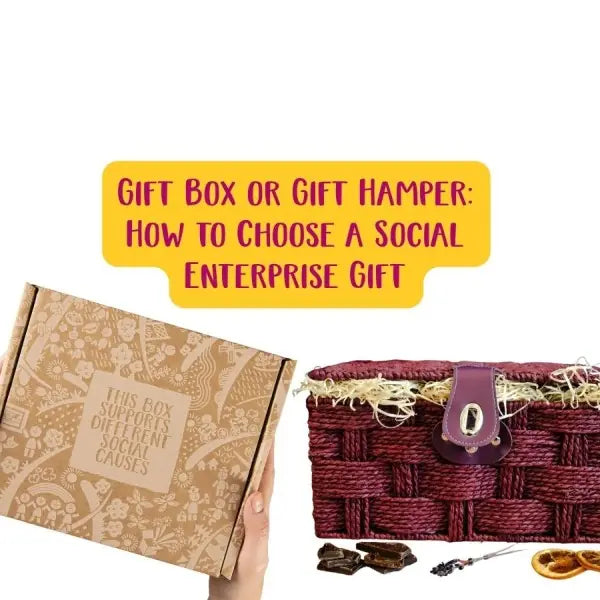
Gift Box or Gift Hamper: How to Choose a Social Enterprise Gift
A social enterprise gift box or gift hamper is a present filled with products from social enterprises, with enough written explanation about the good it does.

Team Christmas Gift or End-of-Year Bonus?
If you are weighing a team Christmas gift against an end-of-year bonus, it helps to treat them as two different gestures.

Ethical Corporate Gifts UK: Social Enterprise Hamper vs Branded Merch vs a Voucher
Compare ethical corporate gifts in the UK: a social-enterprise hamper, branded merch, or a voucher. What each signals and when to use which.

After Sending Corporate Gifts to 300+ Companies, Here’s What People Actually Want to Receive
We have had a very good opportunity to see what people genuinely enjoy receiving and which supposedly “safe” corporate gifts are often far less popular.

Social Stories Club Corporate Gifting
If you are looking to show your team how much they are appreciated, attract and retain clients, or you have a corporate event and you want to create an impression, then our sustainable corporate hampers are just what you need. We have created the most exciting gift to give and receive which are packaged beautifully using sustainable materials, filled with delicious products made by social enterprises, and also include a storybook starting conversations about sustainability.
"Social Stories Club is a fantastic initiative that enables social enterprises to collaborate in such a creative way. The perfect way to buy gifts with a social impact" - David Adair, Head of Community Engagement, PwC