
What Happens When You Spend £675,000 With Social Enterprises? The Real Impact Behind Our Gift Hampers
At Social Stories Club, we have now spent more than £675,000 with social ventures, purchasing products from businesses that use trade to help tackle social and environmental challenges. It is a figure we are incredibly proud of, but over the years we have realised that the value of this spending can extend far beyond the original purchase.
We have watched an interesting ripple effect emerge through corporate gifting. A company might buy sustainable gift hampers for hundreds of employees or clients, introducing all of those recipients to products from social enterprises they may never previously have encountered. Some recipients then seek out those businesses themselves, while corporate customers have discovered products through our hampers that they have gone on to purchase regularly for their workplaces, including everyday office products such as tea.
We think of this as the social enterprise ripple effect, where one purchase creates the opportunity for another person or organisation to discover a social enterprise and potentially become a customer themselves.
After spending £675,000 with social enterprises, however, one of our biggest lessons has actually been much simpler: social enterprise products can compete on quality. Their impact might be what initially makes somebody interested in their story, but the quality of their products is what makes people want to buy them again.
What is a social enterprise?
A social enterprise is a business that trades to address a social or environmental problem. Rather than separating doing good from doing business, social enterprises build their purpose into the way the organisation operates and use commercial activity as a way of creating positive change.
The exact impact varies enormously between organisations. Some create employment and training opportunities for people who face barriers to work, while others tackle food waste, support education, protect the environment or reinvest profits into addressing a particular social challenge. At Social Stories Club, we work with more than 30 UK-based social ventures, with their products appearing across our sustainable gift hampers.
This means that something as familiar as a chocolate bar, cup of tea, bar of soap or packet of biscuits can have a much bigger story behind it. The recipient still receives something delicious, useful or beautiful, but the money spent purchasing that product is also flowing towards a business designed to create positive change.
What makes a social enterprise gift different?
A social enterprise gift contains products purchased from businesses that exist to create positive social or environmental change through trade. For companies, this creates an opportunity to think differently about money that they were already planning to spend.
Businesses collectively spend significant amounts every year on Christmas gifts, employee thank-you gifts, client gifts, new starter boxes, event gifts and employee recognition. Instead of viewing social impact as something that always requires a completely separate budget or initiative, businesses can also ask a much simpler question: where is the money we are already spending going?
Choosing products from social enterprises means an employee or client can still receive a brilliant gift, while some of that existing gifting budget is directed towards businesses tackling social and environmental challenges. The gift doesn't need to become a charitable donation or lose the things that make it enjoyable to receive. It is simply a different decision about where the company's purchasing power goes.
What does spending £675,000 with social enterprises actually mean?
It is important to be precise when businesses talk about social impact, because there is a significant difference between supporting another organisation's work and claiming its outcomes as your own. Social Stories Club has spent more than £675,000 purchasing products from social enterprises, and we are immensely proud to have directed that level of spending towards purpose-led businesses.
The incredible social and environmental outcomes created by those organisations belong to them. Our role is to purchase their products, introduce their businesses and stories to new audiences, and encourage more money to flow towards organisations using business as a force for positive change.
The social enterprises we work with tackle a huge variety of challenges, and their products demonstrate just how much impact can sit behind an everyday purchasing decision.
Chocolate & Grace: supporting women into sustainable employment
Chocolate & Grace is a Scottish social enterprise producing high-quality chocolates while supporting women who have experienced the criminal justice system towards fulfilling, sustainable employment. Through its work, the organisation creates opportunities for women who can face significant barriers to personal development, learning and economic wellbeing.
What makes this particularly powerful in a gifting context is that the recipient does not have to compromise on the experience of receiving a brilliant product. They receive delicious chocolate, but once they discover the organisation behind it, that chocolate also becomes an introduction to a business with a much bigger purpose.
NEMI Teas: helping refugees gain UK work experience
NEMI Teas produces whole-leaf tea while providing employment opportunities for refugees, helping people gain local work experience and develop skills that can support their journey into the UK workforce and wider society.
Tea is also a great example of the ripple effect we have witnessed through corporate gifting because it is something people purchase repeatedly. We have seen corporate customers discover products through gifts they originally bought for their teams and subsequently go on to purchase products such as tea regularly for their workplaces.
In those situations, the original gift has done something far beyond its initial purpose. It has introduced another buyer to a social enterprise, and a product that began as part of a one-off employee gift can become part of a company's ongoing purchasing.
ARTHOUSE Unlimited: putting artists' work at the heart of the product
ARTHOUSE Unlimited works with a collective of artists living with learning disabilities and complex neurodiverse needs. The artists create original artwork alongside instructors, which is then developed into beautifully designed products.
For me, this is also a very personal example of what I have learnt about social enterprise products through running Social Stories Club. I use ARTHOUSE Unlimited soap in my own home, and it hasn't become a staple because I feel that I should use a social enterprise product. I use it because I genuinely love the product.
That distinction matters because sustainable and social enterprise products should not need to rely on a sense of obligation to generate repeat purchases. The strongest social enterprises create products that stand on their own merit, with the impact behind them adding another reason to choose them rather than compensating for something inferior.
Spice Kitchen: creating impact through an everyday product
Spice Kitchen is a family-run business founded by a mother-and-son team. Alongside producing its range of spices, the business supports education and works with seamstresses who can face disadvantages in accessing employment to produce the recycled sari fabric used around its spice tins.
It is a brilliant illustration of how several layers of impact can sit behind something as seemingly simple as a kitchen product. Someone can receive something colourful, useful and delicious while also discovering the human story behind how that product was created.
Amplify Goods: rethinking everyday essentials
It is a brilliant illustration of how several layers of impact can sit behind something as seemingly simple as a kitchen product. Someone can receive something colourful, useful and delicious while also discovering the human story behind how that product was created.
Amplify Goods creates soaps and scents with a focus on both environmental and social impact. Its approach includes refill-first products designed to reduce waste alongside creating Living Wage employment opportunities for people who can face barriers to work.
The business demonstrates something we have seen repeatedly across the social enterprises we work with: the mission does not have to come at the expense of the product. A business can set out to create an excellent product while simultaneously designing its operations to create wider social or environmental value.
Are social enterprise products actually good quality?
One of the biggest things I have learnt through Social Stories Club is that buying from a social enterprise does not have to mean compromising on quality. There can sometimes be an unspoken assumption that an ethical or social enterprise product is something you buy primarily because it is the "right" thing to do, even if it might not otherwise have been your first choice.
My own experience has been completely different. Some of the products I originally encountered through building Social Stories Club have become genuine staples in my home. I use UpCircle face cream every day, I use ARTHOUSE Unlimited soap, and I regularly use our canvas tote bags. I originally discovered these products because of Social Stories Club, but I continue using them for exactly the same reason anybody repeatedly purchases a product: they are genuinely good.
This has changed the way I think about the relationship between quality and impact. A social or environmental story can make somebody curious about a product and give them an additional reason to try it, but impact might create the first purchase while quality creates the second. For social enterprises to achieve long-term growth, that second purchase is incredibly important.
What is the social enterprise ripple effect?
The social enterprise ripple effect is what happens when an initial purchase introduces new people to a social enterprise, creating opportunities for further purchases and greater awareness beyond the original transaction. We have seen this happen through corporate gifting, where a single company order can introduce hundreds of people to several social enterprises at once.
Imagine a company sending gifts to 500 employees, with each gift containing products from several different social enterprises. Those employees haven't simply received a hamper; they have also potentially been introduced to a collection of purpose-led businesses that they may never have discovered otherwise.
Not every recipient will go on to become a customer, of course, but some will look up the company behind a product they particularly enjoyed, buy something else from them or recommend the brand to somebody they know. A corporate buyer might discover a tea through an employee gift and later consider buying it for the office, while another recipient might discover a skincare brand that eventually becomes part of their everyday routine.
We have seen versions of this happen ourselves, with corporate customers discovering products through the gifts they bought for their teams and subsequently becoming regular buyers of some of those products for their workplaces. The original corporate gift therefore becomes an introduction, rather than necessarily being the end of the relationship.
Why can corporate gifting be a powerful procurement decision?
Corporate gifting is often treated purely as a nice-to-have, but it is also a form of procurement. Once a business has decided that it is going to spend money thanking employees, welcoming new starters or sending gifts to clients, it has a choice about which organisations ultimately receive that money.
If a company has already allocated £10,000 to employee Christmas gifts, for example, creating additional social impact does not necessarily require the business to find another £10,000 for a separate initiative. It can instead examine whether some of its existing £10,000 budget could be spent with organisations creating positive social or environmental outcomes.
If two gifts offer comparable quality, value and recipient experience, but one contains products from organisations tackling issues such as unemployment, inequality, food waste, education or environmental sustainability, the company's purchasing decision can potentially work harder without diminishing the quality of the gift itself.
We believe there is enormous potential in businesses applying this thinking beyond corporate gifts as well. Once a company discovers an excellent social enterprise product through gifting, there may be opportunities to consider that supplier for everyday procurement, whether that is tea for the office, toiletries, food, stationery or other regular purchases.
Does buying social enterprise gifts mean compromising on the gift?
Buying social enterprise gifts should not mean compromising on quality, because social impact cannot turn a product somebody does not want into a great gift. If a recipient receives something they won't use, eat or enjoy, an inspiring story behind the product does not suddenly make the gifting experience successful.
This is why product quality matters so much to us when choosing what goes into Social Stories Club gifts. We want people to discover the impact story because they enjoyed the product and became curious about the business behind it, rather than feeling that they have to overlook the quality because the organisation has a worthwhile mission.
The best social enterprise gifts therefore achieve both things simultaneously. They are products people genuinely want to receive, while the stories behind those products make the experience more meaningful and memorable.
How can businesses support social enterprises through gifting?
Businesses do not necessarily need to increase their gifting budgets to support more social enterprises. One of the simplest starting points is to examine existing expenditure and consider whether some of the products already being purchased could come from purpose-led suppliers.
When choosing corporate gifts, businesses can ask suppliers where products come from, look specifically for products made by social enterprises and make sure recipients are told about the impact stories behind the products they receive. They can also consider whether products discovered through gifting could become part of their wider procurement, particularly for everyday items the organisation already purchases regularly.
This is why we see corporate gifting as a potentially powerful introduction to social procurement. A company does not have to overhaul its entire supply chain overnight. Sometimes the first step is simply discovering that an excellent alternative exists.
Why does telling the story behind the product matter?
The story behind a social enterprise product matters because recipients cannot support an organisation they do not know exists. If somebody receives an excellent chocolate bar without any context, they might thoroughly enjoy it but never realise that the business behind it is tackling a social challenge.
When the recipient learns about the organisation alongside experiencing the product, something different happens. They can enjoy the chocolate, tea, skincare or soap for what it is while also understanding the wider purpose of the business that created it.
That is why we believe it is important for our gifts to communicate the stories behind the social enterprises whose products they contain. The product creates the initial experience, while understanding the story can make the business behind that product more memorable and give somebody a reason to seek it out again.
What have we learnt from spending £675,000 with social enterprises?
More than anything, spending £675,000 with social enterprises has taught us that social impact and excellent products do not have to compete with each other. The strongest social enterprises are not asking consumers to overlook quality because they support a worthwhile cause; they are creating products people genuinely want to buy while using business as a mechanism for positive change.
We have also learnt that the value of a purchase can extend beyond the first transaction. When a corporate customer buys gifts containing social enterprise products, those products are introduced to employees, clients and colleagues who may never previously have encountered the businesses behind them. Some of those people then make their own purchases, recommend the products or bring them into their workplaces.
Our £675,000 spend with social enterprises matters enormously to us, but the potential ripple effect is what makes the story even more exciting. A gift recipient might discover a new chocolate company, an employee might find a skincare product that becomes a household staple, or a corporate customer might discover a tea they love enough to start ordering it for their office.
When those moments happen across thousands of gifts, corporate gifting becomes more than a transaction. It becomes a way of introducing social enterprises to audiences that might otherwise never discover them.
A gift can be the beginning of the story
We started Social Stories Club because we believe everyday spending has the potential to create positive change, and corporate gifting is a particularly powerful example because the spending is often already happening. Companies are already buying gifts, while people already want brilliant chocolate, coffee, tea, skincare, snacks and beautiful products for their homes.
At the same time, social enterprises across the UK are creating exceptional versions of those products while using their businesses to address social and environmental challenges. Our role is to help connect those two worlds by putting brilliant social enterprise products into the hands of people who might otherwise never have encountered them.
Spending £675,000 with social enterprises is a milestone we are incredibly proud of, but we do not see that number as the end of the story. Every product purchased creates another opportunity for somebody to discover the business behind it, and when the quality is good enough to turn that first introduction into a second purchase, the impact of one corporate gift can travel considerably further than the box it arrived in.
Are you looking for sustainable gifts?
If you want gifting to feel smooth and genuinely thoughtful, begin with our Corporate Gifting page. It gives you a clear starting point and helps you decide whether you are sending Gifts for Employees or Gifts for Clients. If you prefer letting people choose exactly what suits them, our Build Your Own Gift Hamper option is ideal because it removes guesswork entirely. If time is tight and you want something instantly impressive, our Pre Curated Corporate Gifts take care of everything. For companies wanting to put values and identity front and centre, our Branded Corporate Gifts range is perfect. And if you are aiming to create something no one else has, our Bespoke Corporate Gifts allow complete creative freedom.
If you ever feel unsure about what direction is best, you can Book A Call With Us and we can plan the whole approach together. And for the simplest possible gifting with guaranteed delight, our Gift Cards are effortless and always well received.
Corporate gifting does not need to be complicated. When done well, it becomes an easy way to build loyalty, strengthen relationships, and show people that you genuinely care.
Follow Social Stories Club on Social Media
Read More From Our Blogs
Slow and Sustainable Gifting: Moving Away From Fast Consumption Toward Meaningful Presents
Think about the last time you bought a gift in a panic. A few hasty clicks, a generic choice wrapped in packaging that went straight into the recycling.
Every Gift Has a Story: Inside the Sustainable Gifting Company Changing How the UK Gives
Gifting is one of life’s oldest traditions– a way to show gratitude, love, and connection. In a world defined by values, the most meaningful gifts tell a story.
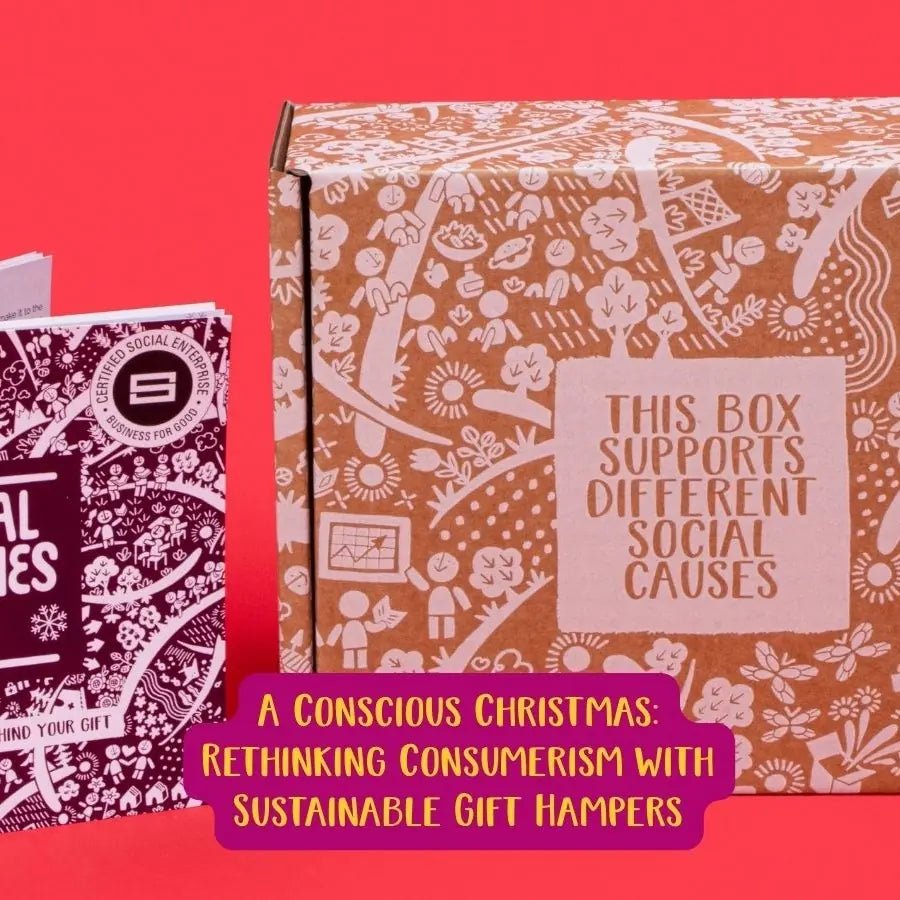
A Conscious Christmas: Rethinking Consumerism with Sustainable Gift Hampers
Companies across the UK spend millions on Christmas presents for staff, clients, and partners, but many of these gifts end up forgotten in drawers.
The Art of Thoughtful Gifting: Prioritising Values Like Sustainability, Quality, and Purpose
The act of gift-giving is a cherished tradition that transcends cultures and generations. It is a way to show appreciation, love, and connection.

Social Stories Club Corporate Gifting
If you are looking to show your team how much they are appreciated, attract and retain clients, or you have a corporate event and you want to create an impression, then our sustainable corporate hampers are just what you need. We have created the most exciting gift to give and receive which are packaged beautifully using sustainable materials, filled with delicious products made by social enterprises, and also include a storybook starting conversations about sustainability.
"Social Stories Club is a fantastic initiative that enables social enterprises to collaborate in such a creative way. The perfect way to buy gifts with a social impact" - David Adair, Head of Community Engagement, PwC